
Client
A regional UK retailer with three physical stores and an online shop. They sell a mix of clothing and home goods and rely heavily on weekend promotions and repeat local customers.
The challenge
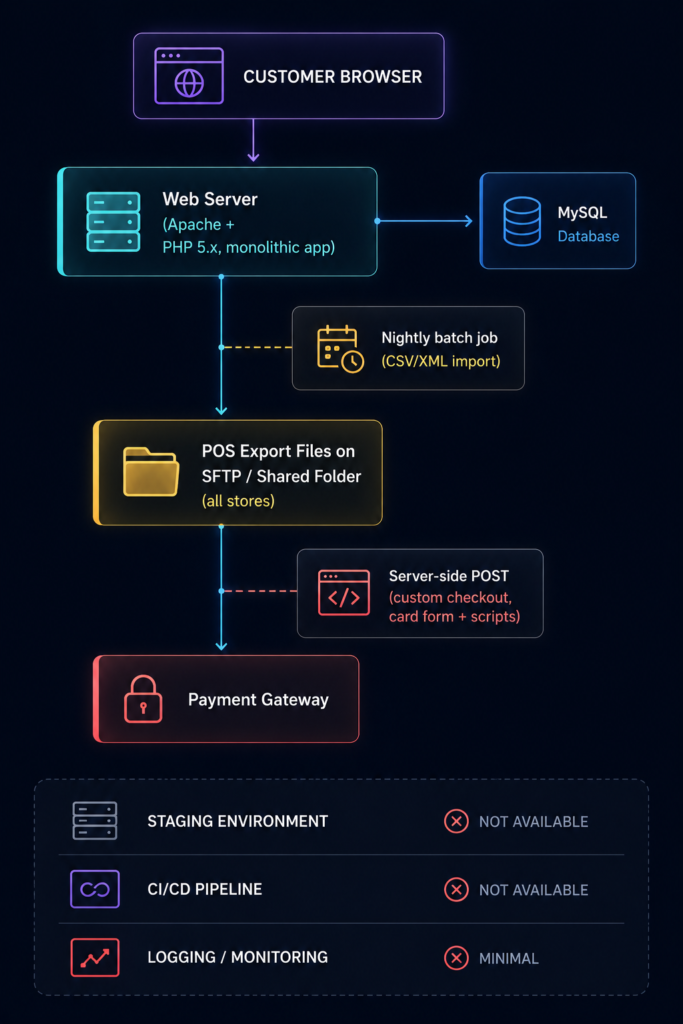
Their website and back‑office tools had grown around a home‑built PHP/MySQL application over many years. It worked, but it was showing its age.
- Stock on the website often didn’t match what staff saw in the stores because updates ran in batches a few times a day.
- During sales, category pages and the cart could take several seconds to load on mobile, so customers gave up and called the stores instead.
- Simple changes like updating a promotion or adjusting shipping rules meant editing PHP files on the live server, with no staging site and no easy way to roll back if something went wrong.
- Their hosting provider and payment partner had started warning about the old PHP version and third‑party scripts around checkout.
The owners were clear: they did not want to replace everything at once or change their in‑store POS. They wanted the existing system made safer and more reliable, without interrupting day‑to‑day trading.
Legacy Architecture
What we did
We kept the core PHP system, but modernized it in stages:
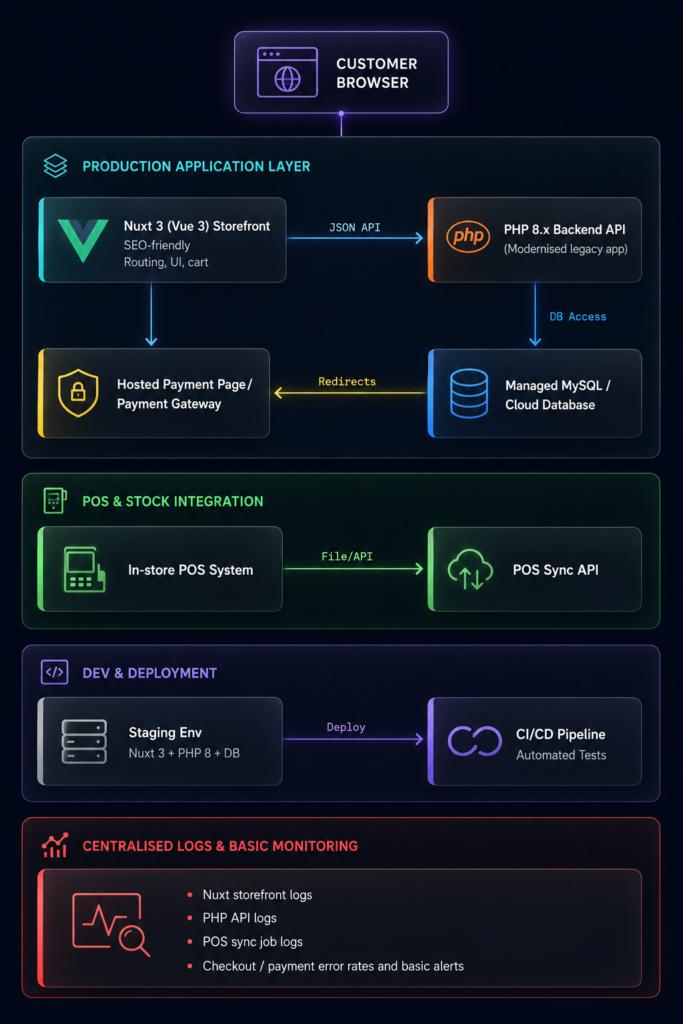
- Upgraded the application to a supported PHP 8 version and cleaned up outdated libraries.
- Introduced a simple Git‑based workflow with a staging environment, so changes could be tested before going live.
- Reworked the stock and order sync so the site could receive more frequent updates from the POS, with better logging when something went wrong.
- Built a new storefront using Nuxt 3 (Vue 3) that talks to the PHP backend through clear APIs. This gave faster pages, better mobile behaviour and cleaner URLs without throwing away the existing business logic.
- Simplified the checkout by moving to a hosted payment page from their provider and removing unnecessary scripts around the payment step.
The Revamped Architecture
The result
The business kept the tools and processes they understood, but now has:
- Faster product and category pages, especially on mobile during promotions.
- Stock levels online that are much closer to what staff see in the stores.
- A safer, more predictable way to make changes, with a staging site and basic automated checks on key journeys.
- A checkout flow their payment partner is more comfortable with, based on a current PHP version and a hosted payment page.
For similar retailers, this kind of steady, low‑risk upgrade is often more realistic and more valuable than a complete rebuild.